
Sprinkler valve repair
Sprinkler valve won’t shut off or won’t turn on? Find the part that failed
A zone that runs nonstop is usually a water-side problem: debris on the diaphragm, a torn diaphragm, or a bleed screw left open. A zone that will not start is usually electrical: no 24 VAC reaching the valve, a cut wire, or a dead solenoid. Two quick tests tell you which, before you dig.
- 24–28 VAC at the valve
- Solenoid ≈ 20–60 ohms
- Water off before the bonnet
- AC vs DC solenoids
Checked against manufacturer specifications and our live catalog · Updated October 2026
Short answer
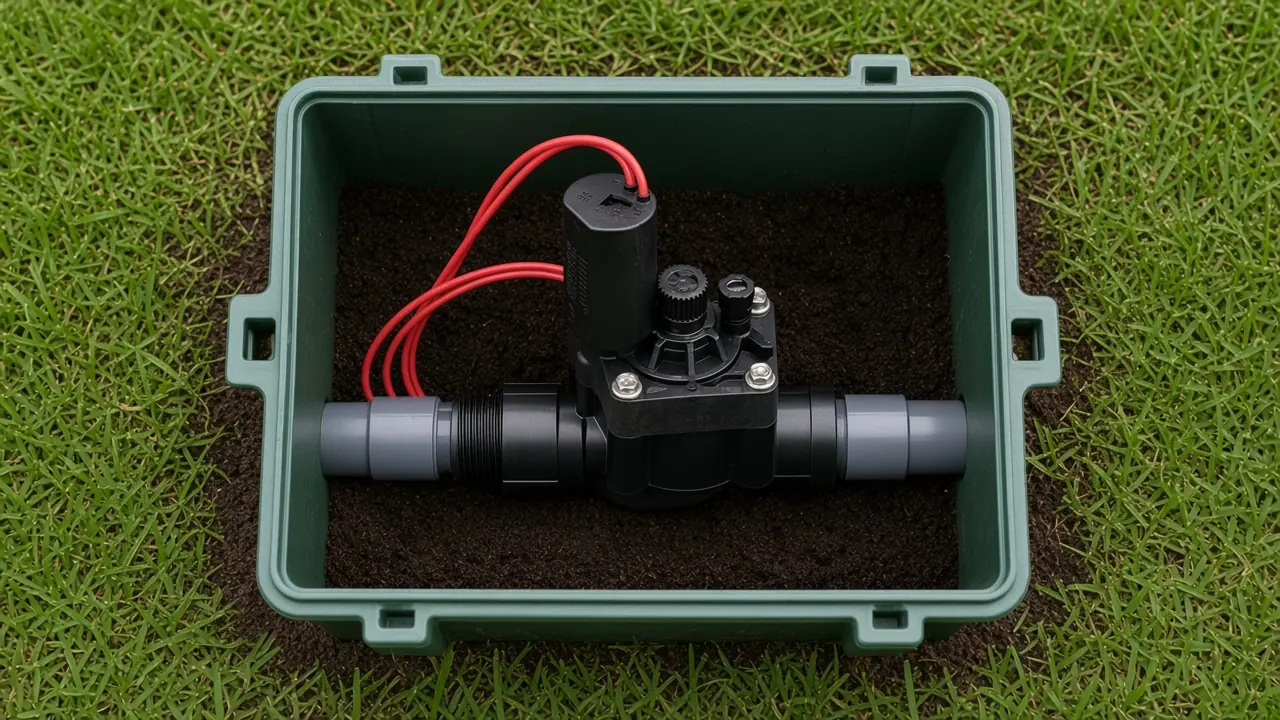
Open the valve’s external bleed screw (or turn the solenoid a quarter turn counterclockwise). If the zone runs by hand but not from the controller, the problem is electrical: check for 24–28 VAC at the solenoid and test the solenoid. If it will not open by hand, or will not close at all, the problem is inside the valve: clean or replace the diaphragm, or replace the valve.
Rule out the controller
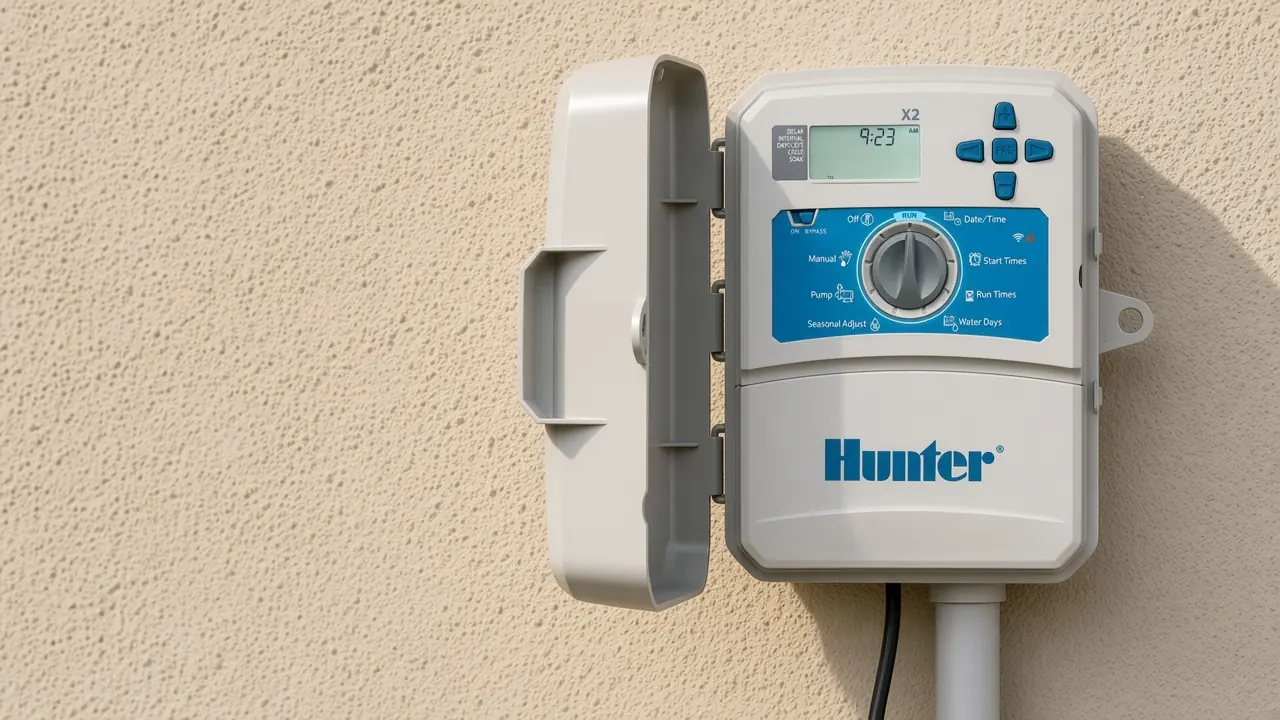
Run the zone manually. If nothing happens, move that zone’s wire to a station you know works. Hunter specifies 24–28 VAC between the station terminal and COM while the zone is on.
Test the valve by hand
Open the external bleed screw or turn the solenoid a quarter turn counterclockwise. Opens by hand: the fault is electrical. Will not open, or will not close: the fault is inside the valve.
Replace what failed
Swap the solenoid, rebuild the diaphragm, or replace the whole valve. Shut the water off before you open the bonnet, and close the bleed screw when you are done.
Parts we ship
Match the part to the failure
Start with the cheapest part that explains the symptom: solenoid, then diaphragm, then the valve.
Solenoid
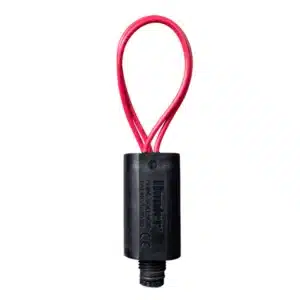
Replace it when the valve opens by hand but not from the controller and the valve is getting 24–28 VAC. Match AC to plug-in controllers and DC-latching to battery controllers.
-
Hunter 606800 24 VAC (PGV, ICV, IBV, HPV, ADV)
$24.49
In Stock
-
Hunter 458200 9 V DC latching (NODE, XC Hybrid)
$28.94
In Stock
-
Rain Bird 9 V latching (TBOS, ESP-9V)
$36.72
76 In Stock
-
Compatible 24 VAC for Toro and Irritrol valves
$22.25
In Stock
Diaphragm and rebuild kits
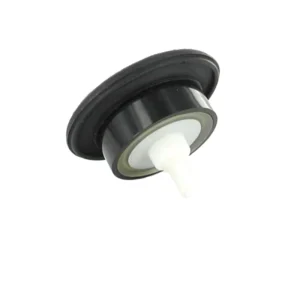
Replace the diaphragm when the zone will not shut off after cleaning, or the rubber is torn or stiff. We do not stock the 1-inch PGV diaphragm; a complete 1-inch PGV is listed under Whole valve.
-
Hunter 1-1/2 in. PGV diaphragm
$28.95
In Stock
-
Hunter 2 in. PGV diaphragm
$27.95
In Stock
-
Hunter ICV 1-1/2 and 2 in. diaphragm
$32.28
In Stock
-
Irritrol 700 1 in. repair kit
$50.07
Ships in 4-6 Days
-
Orbit 3/4 and 1 in. valve repair kit
$25.19
In Stock
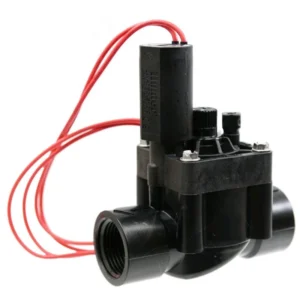
Whole valve
Replace the valve when the body or threads are cracked, or water bubbles up from the bonnet. Match globe vs. angle and the thread size. Anti-siphon valves go above ground.
-
Hunter PGV-101G 1 in. globe, flow control
Price range: $19.95 through $336.00
In Stock
-
Hunter PGV-101A 1 in. angle, flow control
Price range: $20.95 through $361.00
In Stock
-
Hunter PGV-100G 1 in. globe
Price range: $17.95 through $310.00
In Stock
-
Hunter PGV 3/4 in. anti-siphon
$56.38
100+ In Stock
-
Rain Bird 075ASVF 3/4 in. anti-siphon
$38.94
100+ In Stock
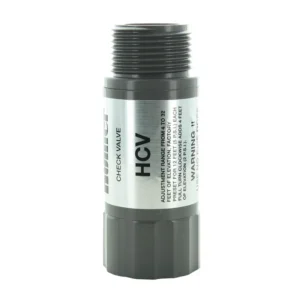
Low head keeps draining
Water trickling from the lowest head after the zone stops is low-head drainage, not a leaking valve. A check valve under that head holds the water in the pipe.
-
Hunter HCV 3/4 in. F x M, adjusts 4–32 ft
$25.95
In Stock
-
Hunter HCV 1/2 in. F x M
$24.95
In Stock
-
Hunter Pro-Spray PRS30 6 in. with check valve
$25.82
100+ In Stock
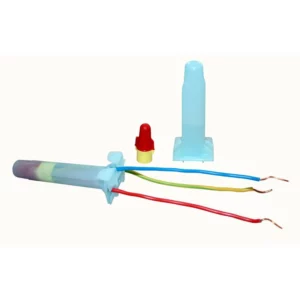
Wire and splices
A cut or corroded common wire takes out every zone on that run. Splice with waterproof direct-bury connectors, not bare wire nuts.
-
DBR/Y-6 direct-bury splice, 2-pack
$15.57
87 In Stock
-
Silicone-filled connectors, 20-count
$40.95
100+ In Stock
-
18-3 irrigation wire, 250 ft
$87.93
In Stock
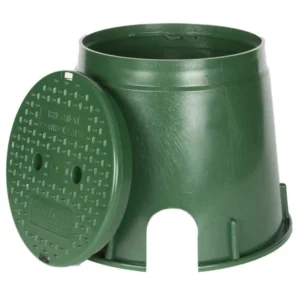
Valve box
A crushed lid or a box full of soil makes the next repair harder. Size the box so you can reach the bonnet screws and the solenoid.
-
10 in. round box, green lid
$31.95
48 In Stock
-
6 in. round box, black lid
$18.99
54 In Stock
-
8 x 14 in. oval box, green lid
$44.49
26 In Stock
Match the symptom
What to check, then what to order
| What you see | What to do | Start here |
|---|---|---|
| Zone runs and will not shut off, even with the controller off | Pull that zone’s wire off the controller. If the water stops, the controller is holding the station on. If it keeps running, close the bleed screw, seat the solenoid hand-tight, then clean or replace the diaphragm. | Diaphragms · New PGV |
| One zone will not turn on | Open the bleed screw. Runs by hand: check 24–28 VAC at the solenoid, then test the solenoid. Will not run by hand: check the flow-control stem is open and the supply is on. | Hunter solenoid · All solenoids |
| Every zone is dead at once | Look upstream of the valves: controller power, the common wire, or a rain sensor holding the system off. Use the sensor bypass switch to test. | Direct-bury splices · Rain sensors |
| Lowest head trickles after the zone stops | Low-head drainage. Add a check valve under the head or switch to a body with a check valve. | Hunter HCV · PRS30 with check valve |
| Water bubbles up in the valve box | Leak at the bonnet, a fitting, or a cracked body. Tighten the bonnet screws; a cracked body means a new valve. | Replacement valves |
| Battery controller will not open the valve | Battery controllers need a DC-latching solenoid. A 24 VAC solenoid will not latch. | Hunter 9 V DC · Rain Bird 9 V |
| Zone runs but pressure is weak | Turn the flow-control stem counterclockwise to open it fully. Then check for debris holding the diaphragm partly open. | Valve debris and bleed ports |
The steps people skip
Before you buy a part
- Shut the water off before the bonnet comes off. The bonnet is holding back line pressure.
- Close the bleed screw when you finish. A bleed screw left open keeps the zone running after the test.
- Match AC or DC. Plug-in controllers use 24 VAC solenoids. Battery controllers need the DC-latching solenoid their maker lists.
- Photograph the diaphragm and spring before you pull them. The diaphragm goes back the same side up.
- Flush after any pipe repair. Grit from a broken lateral or mainline lodges in the diaphragm and keeps the valve open. Run the zone with the bleed screw open to flush it.
- Keep globe vs. angle, and the thread size. A globe body will not replace an angle valve without re-plumbing.
- Keep anti-siphon valves high. Rain Bird lists at least 6 inches above the highest head on that zone for its anti-siphon valve. Inline valves need a separate backflow device.
- Use waterproof splices. Wire nuts without sealant corrode underground and fail intermittently.
Common questions
Why won’t my sprinkler valve shut off?
Common causes: the external bleed screw is open, the solenoid is loose, or debris is holding the diaphragm off its seat. Pull the station wire at the controller first: if the water stops, the controller is the cause. If it keeps running, clean the diaphragm or replace it.
How do I test a sprinkler solenoid?
Disconnect its two wires and measure resistance with a multimeter. Most 24 VAC irrigation solenoids read roughly 20 to 60 ohms; Hunter’s decoder guide lists 20 to 35 ohms for its solenoids. A reading near zero is a short and no reading is an open coil. Either way, replace it.
What voltage should reach a sprinkler valve?
Hunter specifies 24 to 28 VAC at the controller station terminal and at the solenoid wires while the zone is running.
Can I replace only the solenoid?
Yes. The solenoid threads into the valve bonnet. Use one listed for that valve brand, and match 24 VAC or DC-latching to the controller type.
Should I rebuild the valve or replace it?
Rebuild when the body is sound and the problem is the diaphragm or solenoid. Replace when the body, bonnet, or threads are cracked, or when the diaphragm for that valve is not available.
Why does water drain out of the lowest sprinkler after the zone stops?
That is low-head drainage: water in the pipe runs downhill to the lowest head. It is not a leaking valve unless the zone never stops. A check valve under that head, such as Hunter HCV, holds the water in the pipe.
What is the difference between globe, angle, and anti-siphon valves?
A globe (inline) valve has the inlet and outlet in a straight line. An angle valve takes water in from the bottom and out the side. An anti-siphon valve has backflow protection built in and must be installed above ground, higher than the heads it feeds.
Go deeper
Sources
Send a photo of the valve and the solenoid
Tell us the brand on the bonnet, the pipe size, and what the zone is doing. We will point you at the solenoid, diaphragm, or valve that fits. Free US shipping.