
Sprinkler winterizing
How to winterize a sprinkler system
Shut the water off, get the water out of the pipes, and protect the backflow preventer. Hunter caps blow-out air at 50 psi on poly pipe and 80 psi on PVC, and Rain Bird’s homeowner guide says 50 psi. Never push air through the backflow.
- ≤ 50 psi poly / ≤ 80 psi PVC
- Air downstream of the backflow
- One zone open first
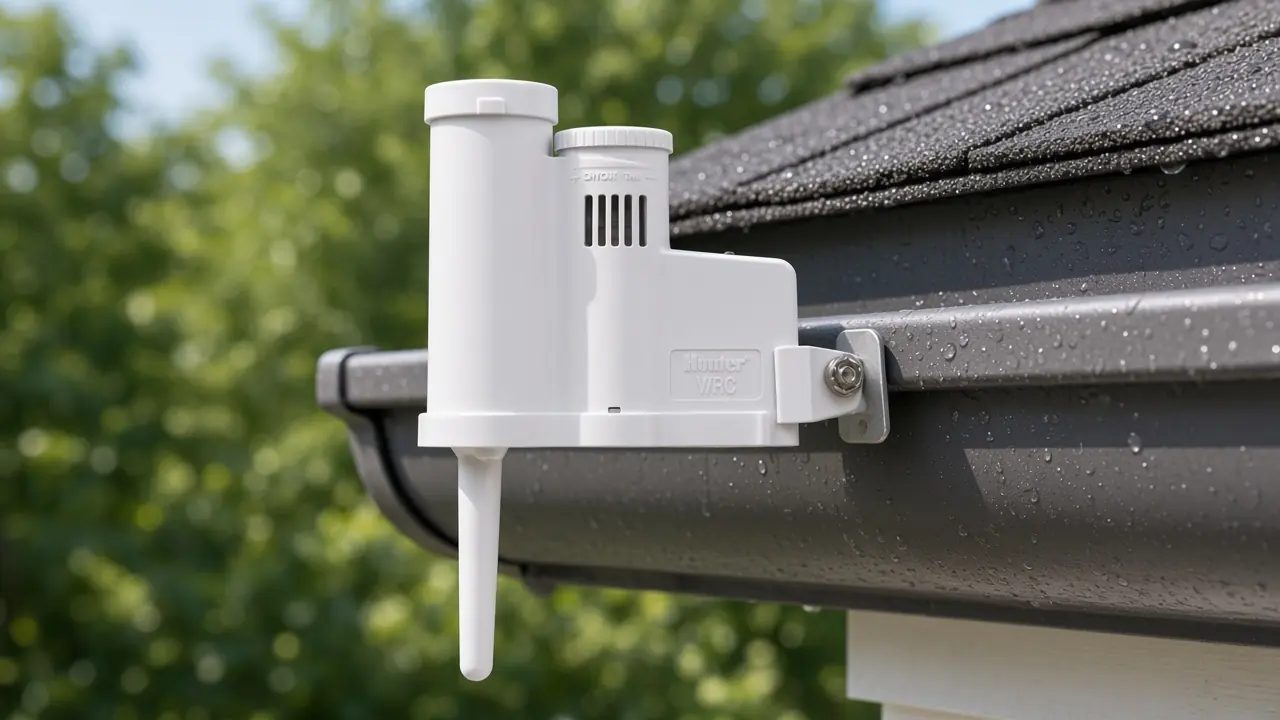
- Hunter Clik freeze shutoff 37°F
Checked against manufacturer specifications and our live catalog · Updated October 2026
Short answer
Close the irrigation shutoff and set the controller to Off. Remove the water by manual drains, automatic drains, or compressed air connected after the backflow preventer, with a zone valve open first. Hunter limits air to 50 psi for polyethylene and 80 psi for PVC; Rain Bird’s homeowner guide limits it to 50 psi. Then drain the backflow and leave its ball valves half open.
Shut off and set the controller
Close the irrigation shutoff valve and insulate it. Set the controller to Off; you do not need to erase the program.
Drain or blow out the lines
Connect the compressor after the backflow preventer. Open a zone before the air goes in. Stay at or under 50 psi on poly pipe and 80 psi on PVC (Hunter); Rain Bird’s homeowner guide says 50 psi.
Drain and protect the backflow
Open the backflow’s test cocks to drain it, then leave the ball valves half open so water cannot be trapped and freeze inside. Insulate above-ground pipe.
Blow-out numbers
Pressure and air volume
| Item | Number | Source |
|---|---|---|
| Max air pressure, polyethylene (flexible black) pipe | 50 psi | Hunter; Colorado State University Extension |
| Max air pressure, rigid PVC pipe | 80 psi | Hunter; Colorado State University Extension |
| Max air pressure, homeowner blow-out | 50 psi | Rain Bird winterization guide |
| Compressor air volume | Largest zone GPM ÷ 7.5 = CFM | Hunter |
| Compressor air volume, typical home | 10–25 CFM | Rain Bird winterization guide |
| Hunter Clik sensor freeze shutoff | 37°F | Hunter listing |
When the pipe type is unknown, use 50 psi. High-volume, low-pressure air removes water better than a tank charged to high pressure.
Parts we ship
Freeze protection and spring repairs
Most freeze damage shows up in spring at the backflow preventer. Bonnet and poppet kits are cheaper than a new assembly.
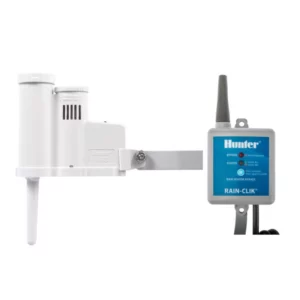
Rain and freeze sensors
Stops scheduled watering when it rains or near freezing, so the system does not ice the walks. Hunter Clik sensors shut off at 37°F.
-
Hunter Wireless Rain-Clik, rain + freeze
$89.03
20 In Stock
-
Hunter Wireless Mini-Clik, rain + freeze
$107.96
Ships in 4 Days
-
Hunter Solar Sync ET, rain + freeze
$166.93
26 In Stock
-
Rain Bird WR2-48 rain + freeze
$89.99
54 In Stock
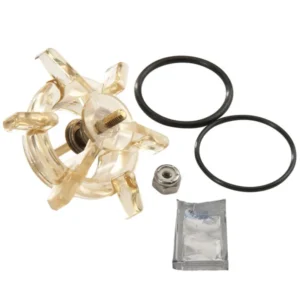
PVB bonnet and poppet kits
A Febco 765 that leaks from the top in spring usually needs a bonnet or poppet kit, not a new assembly. Match the kit to the pipe size.
-
Febco 765 bonnet assembly, 3/4 in.
$143.16
In Stock
-
Febco RK-765 poppet, 1/2 to 3/4 in.
$76.34
In Stock
-
Febco RK-765 poppet, 1 to 1-1/4 in.
$91.11
In Stock
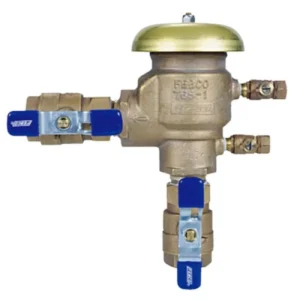
Replacement PVB
Replace the assembly when the bronze body is cracked. A PVB installs at least 12 inches above the highest downstream outlet. Local code may require a certified test after install.
-
Febco 765 3/4 in., quarter-turn + freeze sensor
$249.99
21 In Stock
-
Febco 765 1 in., quarter-turn + freeze sensor
$279.99
In Stock
-
Wilkins 720A 3/4 in.
$220.04
In Stock
-
Wilkins 720A 1 in.
$245.84
100+ In Stock
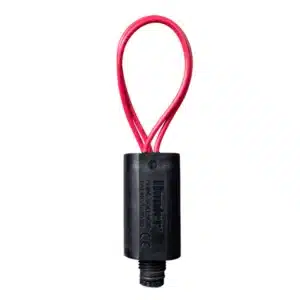
Spring start-up parts
A zone that will not start in spring is usually a solenoid or diaphragm. The valve guide walks through the two-minute test.
- Valve troubleshooting guide
-
Hunter 24 VAC solenoid
$24.49
In Stock
-
Hunter HCV check valve
$25.95
In Stock
Match the symptom
What you find in spring
| What you see | What to do | Start here |
|---|---|---|
| PVB leaks or sprays from the top cap | Freeze damage to the bonnet or poppet. Rebuild with the kit for that size; replace if the body is cracked. | 3/4 in. bonnet · 1/2–3/4 in. poppet kit |
| Bronze backflow body is split | Replace the assembly. Have it tested if your water provider requires it. | Febco 765 3/4 in. |
| Sprinklers ran during a freeze | Add a rain and freeze sensor so the controller skips cold mornings. | Wireless Rain-Clik |
| A zone will not start in spring | Run the valve test: bleed by hand, then check voltage and the solenoid. | Valve guide |
| Wet spot over the mainline | A split pipe from trapped water. Send a photo and we will spec the repair fittings. | Send a photo |
The steps people skip
What ruins a blow-out
- Never blow air through the backflow preventer. Hunter and Colorado State University Extension both say to connect after it. Air can damage the internal parts.
- Open a zone before the compressor. Rain Bird’s guide says never run the compressor without a zone valve open.
- Do not stand over pipe, valves, or heads. Wear eye protection. Do not leave the compressor unattended.
- Use air volume, not tank pressure. Hunter warns against charging the tank high and dumping it into the mainline.
- Keep cycles short on rotors. Rain Bird warns that long air runs heat gear-drive rotor seals.
- Leave the backflow ball valves half open. Colorado State University Extension: return the isolation valve to half open, half closed after the blow-out.
- Close manual drains afterward. Hunter: do not leave manual drain valves open after the blow-out.
- Drain valves alone may not be enough. Colorado State University Extension advises blowing out even systems with drain valves, because water stays in low spots.
Common questions
What PSI should I use to blow out sprinklers?
Hunter says not to exceed 50 psi on polyethylene pipe or 80 psi on PVC. Rain Bird’s homeowner winterization guide sets 50 psi as the limit. If you do not know your pipe, use 50 psi.
What size air compressor do I need?
Hunter’s formula is the GPM of the largest zone divided by 7.5 for the CFM needed. Rain Bird’s homeowner guide calls for roughly 10 to 25 CFM for a home system. Small shop compressors often cannot keep up.
Can I blow air through the backflow preventer?
No. Connect the compressor to a fitting after the backflow preventer. Hunter and Colorado State University Extension both say not to blow compressed air through it.
Should I turn the sprinkler controller off or unplug it?
Set it to Off. The program does not need to be erased, and spring start-up is just switching it back on.
Are automatic drain valves enough?
Colorado State University Extension advises blowing out the system anyway, because drain valves can leave water in low spots.
Is a freeze sensor a substitute for winterizing?
No. A freeze sensor only stops scheduled watering near freezing (37°F on Hunter Clik sensors). It does not remove water from pipes or protect the backflow preventer in a hard freeze.
Where do I connect the compressor?
At a blow-out fitting, quick coupler, or hose connection located after the backflow preventer, with the backflow’s downstream isolation valve closed.
Sources
Send a photo of the backflow preventer
Tell us the brand and size on the body. We will match the bonnet, poppet, or replacement assembly. Free US shipping.