HOA irrigation rules work when they match physics, local water ordinances, and the equipment on the wall—not when they only say “keep the grass green.” This guide helps presidents, board members, and property managers write enforceable common-area policies, run audits that survive owner meetings, and phase controller retrofits that produce documentation.
For the full upgrade map, see our HOA irrigation controller upgrade hub. Ready for pricing? Use the Quote Center and note “HOA common area.”
Align rules with measurable metrics
Boards want green entries and low complaint volume. Tie covenants and landscape guidelines to metrics the controller can report:
- Water budget per irrigated acre (or vs prior-year meter reads)
- Allowed watering days/hours copied from the water district, not invented by the board
- Acceptable dry-down windows during drought stages (“brown is okay” campaigns)
- Response SLA for leaks and stuck valves (hours, not “next week”)
Publish a one-page resident explainer when seasonal adjust or Predictive Watering reduces run times—otherwise owners assume the landscaper “turned things off.”
Common-area irrigation audit package
An audit sells the retrofit because it shows before/after numbers. A practical package includes:
- Controller inventory (make/model, station count, Wi-Fi status)
- Zone map: turf, shrubs, drip, slopes, and problem spots
- Photo log of cabinets, rain sensors, and visible leaks
- 30–90 days of meter or flow data if available
- Deficiency list prioritized by water waste and liability
Use the water-savings calculator and runtime calculator to translate zone run times into board-friendly gallons and dollars.
Retrofit path that boards can approve
Spread capital expense across fiscal years when reserves are tight:
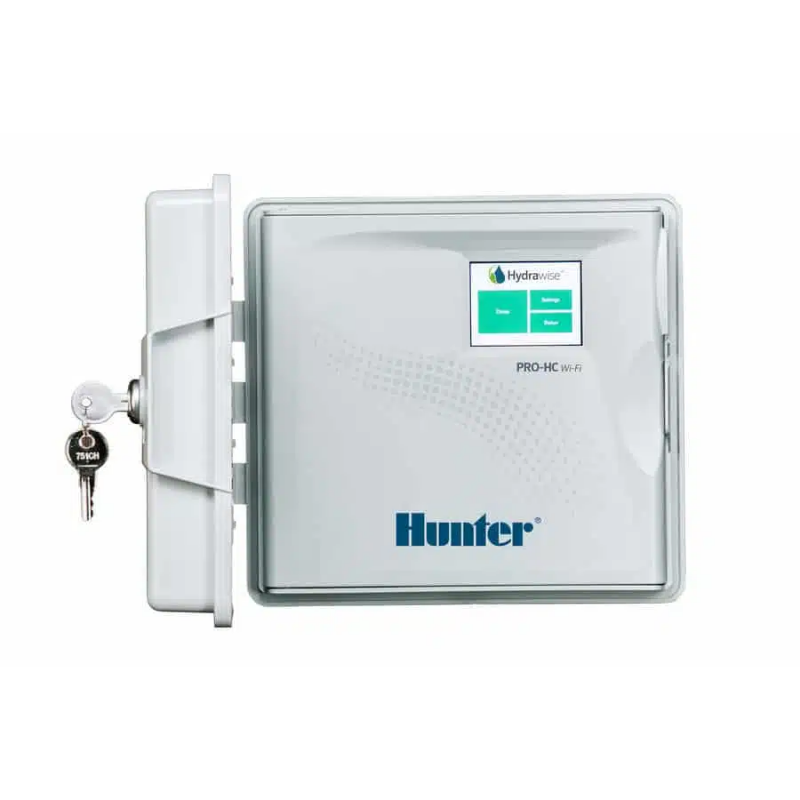
- Year 1: Facepack upgrades on Pro-C / ICC cabinets (HPC-FP, HCC-FPUP) plus rain/freeze sensors.
- Year 2: Flow meters and master valves on the wettest loops (HC-100-FLOW).
- Year 3: Remaining parks/medians and Contractor software seats for the management company.
Step-by-step retrofit options live on the Pro-C / ICC Hydrawise retrofit guide and the Pro-C upgrade hub.
Resident communication that reduces tickets
Smart schedules look “wrong” to owners who expect fixed Tuesday watering. Publish short notes when:
- Rain delays or ET cutbacks pause irrigation
- Drought stages change allowed days
- A brown-is-okay policy is active
- Flow alerts shut a zone for repair
Point owners to the association’s landscape rules—not the landscaper’s personal preferences—so the board stays the source of truth.
Municipal rules vs HOA rules
City and water-district restrictions always win. Association guidelines should reference the district ordinance and instruct vendors to program non-watering days into Hydrawise. For broader conservation context, see our water-restriction content cluster and the HOA water budget reporting guide.
Frequently Asked Questions
Who pays for common-area irrigation upgrades?
Typically the HOA via reserves or a special assessment defined in the governing documents. Unit-side yards are often owner responsibility—spell that out so quotes do not mix private and common scopes.
How often should irrigation audits repeat?
Annually, after major landscape renovations, or whenever the water district changes stages. Re-audit after every controller platform change so the new baseline is documented.
Can Hydrawise prove compliance to the water district?
It provides schedules, history, and flow charts boards and managers can export. Pair those exports with meter reads—controllers do not replace the utility meter, but they explain why usage moved.
What if residents complain about brown turf?
Point to the published drought policy and district stage. Predictive Watering and matched precipitation still protect plant health better than panic overwatering that risks fines.
Next step
Return to the HOA controller upgrade hub or request a common-area quote with your audit notes attached.